Organic Farming
More people need to be
practicing organic farming methods. At the most basic level organic farming
produces crops or meat without the use of synthetic chemicals or pesticides,
with the aim of ensuring no harmful residues are present on the foods. Peoplewho use organic methods believe that organic farming works in harmony withnature rather than against it. This involves using several techniques to
achieve good crop yields without harming the natural environment or the people
who live and work in it.Organic farming works in a similar fashion to
chemical farming. They both have to build and keep good soil structure and
fertility. They both have to control pest, disease and weeds. Many
organic farmers are also cautious of water management and animal husbandry. The
way each achieve this differ considerably.
Environmental
implications of organics and pesticides
Organic methods include maintenance and
improvement of soil quality, prevention of ground and surface water contamination, greenhouse gas reduction, encouragement of biodiversity and conservation of water and energy. Organic practices
integrate natural methods such as mulching, plant diversity, native and
adapted plants, crop rotation and the introduction of beneficial insects to
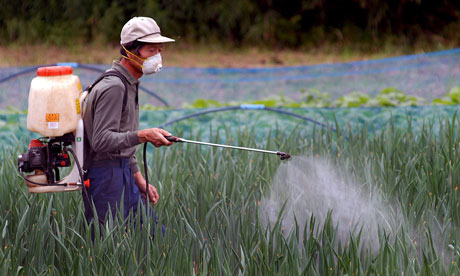
control pests without synthetic pesticides.Synthetic pesticides help make definitive high
crop yields. While effective in achieving this objective, pesticides
contaminate soil, air, ground and surface water, as well as the plants and
animals that come in to contact with these contaminated sources. Freshwater and
marine organisms are susceptible to pesticides through agricultural runoff.Pesticides also reduce soil fertility (necessitating the further use ofsynthetic fertilizers) and can travel far from the original source,contaminating water and air hundreds of miles from the location of application.So although pesticides can
give higher yields, there are little other benefits from using chemicals such
as these. Furthermore many organic practitioners found that by using organic
pesticides they managed to increase the soil’s fertility naturally without
having to rely on chemicals. After some crop rotations many farmers found that
their yields were either matching or surpassing that of their previous
chemically farmed produce.
Health
implications of organics and pesticides
Other
things to consider
Though organic farming methods offer a number of
environmental benefits, it is a time consuming process that often results in
smaller yields to chemical crops. Also an organic apple shipped across
the world creates a different set of environmental problems. Locally grown food
(particularly organic) is the key to sustainable food production.
References
- U.S. Department of Agriculture: National Agricultural Library: Should I Purchase Organic Food?
- U.S. Department of Agriculture: Economic Research Service: Environmental Interactions With Agricultural Production
- Food and Agriculture Organization: Pesticides as Water Pollutants
- World Health Organization: Acute Pesticide Poisoning
- U.S. Department of Agriculture Organic: Nutrition Issues for Organic Food

Hi Jack
ReplyDeleteI like that your blog is very factual and you clearly know your stuff and have done a decent amount of research. I can appreciate why you chose this topic because it is quite relevant in today's world. I like that you have broken it down, as it makes it a lot easier to grasp what I am reading. The sub-titles make it very clear as well. All in all, very good and i can't wait to see the final product.
Mister Jack!
ReplyDeleteCool topic. I personally dig this topic because over the years I have been trying to switch to organic living - though, I have sucked badly at it haha/ I think it is expensive haha - your post has given me a surge of interest in this area again.
Thanks for schooling me some more on Organic Farming. (Random waffle side-note: My friend and her family run an organic chicken farm, so now I can tell her everything I have learnt from your post haha.) It is a cooler way to go about farming, I reckon. Getting rid of all the harmful stuff and just making life that bit more fresh! So many processed bits and bobs around the place, it would be nice to strip back to the natural.
Just one little thing: I was reading the "Health Implications of organics and pesticides" section and after the first few sentences you have a little reference bracket there "(see ref. 5.)", but I think you have missed out the reference at the bottom of the post.. Maybe you did it on purpose to see if we were paying attention? :)
I really like the name of your blog too, The soil we till - fits perfect! Unless it is, The soil wet ill? Bad joke, Davy. (Sounds like a cool band name/ song too!) And I am also a huge fan of visual-ness, so that gigantic picture you used in the previous post was really cool. I reckon the use of graphics really draws an audience in..
Side note: have you heard of WWOOF http://www.wwoof.co.nz ? I do not actually remember what the initials stand for haha, but I made friends with this person last year who moves around the country and lives with families that are part of WWOOF and she like, gains experience in organic living and like, she volunteers at these homes/farms and in return she gets to stay they for free - paying her way by helping out on the farm and stuff. I think this organisation is all around the world, so that is pretty cool. Helps you gain a greater understanding in Organic Living and stuff. Pretty neat!
COOL READ, JACK! Thanks.
I spent three months WWOOFING in Sri Lanka last year! The most eye opening experience of my life to be honest. Thanks for the hint with my references that has been changed up because of you. Check out my comment on your blog. Please don't hate me too much haha.
DeleteJack
Hey Jack , really enjoyed reading your topic and found it quite a unique yet interesting topic. I like the way that you clearly identify your sources of research and how it is easy to find the sources compared to other blogs ive read. If there is one thing i would like to read more about would be the monetary side of things. i did notice in the photo that there was financial statistics of it being 20% higher in price and i was interested in that particular category. However everything else is great, the layout the blog, great job :)
ReplyDeleteHey man, cheers for your thought on the money side of things. I did look into that because of you, and I suppose it's an important thing in this world. Organic farming can actually be free after a while. Transition from chemical farming to organic will be costly, and you will find that first the first few years there will be a low crop yield, as the soil is slowing becoming naturally fertile again (rather than relying on the chemicals for it's nutrients). But if you work at it, over time your home garden, farm, or what ever will be could be sustainable, cost free and only profitable.
Deletecheers for the comment man
Jack, I find your topic especially interesting. With the issue of global warming constantly being covered is nice that you have taken a different approach and with argued a solution. The above piece of writing is super factual and statistical which I appreciate. I agree with Patrick when he says that you have obviously researched this topic thoroughly. You have also worked well to include your opinion which is at times difficult. Hyperlinks could possibly be added to this post to make it more interactive for the reader. All in all I really enjoyed reading this blog and I think you have made some great points. It is effective how you have simplified the information so that it reads clearly and effortlessly for the reader. I especially like the line "People who use organic methods believe that organic farming works in harmony with nature rather than against it". Thanks Jack!
ReplyDeleteThanks for the comment Kelly, you will be glad to know that there are Hyperlinks in the text now!
Delete