Tuesday, 16 April 2013

Organic Farming


More people need to be practicing organic farming methods. At the most basic level organic farming produces crops or meat without the use of synthetic chemicals or pesticides, with the aim of ensuring no harmful residues are present on the foods. Peoplewho use organic methods believe that organic farming works in harmony withnature rather than against it. This involves using several techniques to achieve good crop yields without harming the natural environment or the people who live and work in it.Organic farming works in a similar fashion to chemical farming. They both have to build and keep good soil structure and fertility. They both have to control pest, disease and weeds.  Many organic farmers are also cautious of water management and animal husbandry. The way each achieve this differ considerably.


Environmental implications of organics and pesticides 

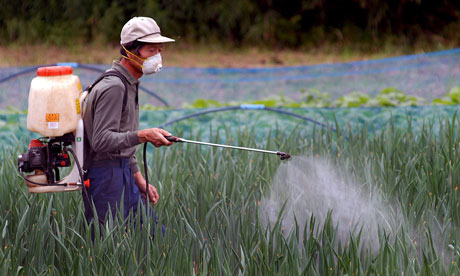
Organic methods include maintenance and improvement of soil quality, prevention of ground and surface water contamination, greenhouse gas reduction, encouragement of biodiversity and conservation of water and energy. Organic practices integrate  natural methods such as mulching, plant diversity, native and adapted plants, crop rotation and the introduction of beneficial insects to control pests without synthetic pesticides.Synthetic pesticides help make definitive high crop yields. While effective in achieving this objective, pesticides contaminate soil, air, ground and surface water, as well as the plants and animals that come in to contact with these contaminated sources. Freshwater and marine organisms are susceptible to pesticides through agricultural runoff.Pesticides also reduce soil fertility (necessitating the further use ofsynthetic fertilizers) and can travel far from the original source,contaminating water and air hundreds of miles from the location of application.So although pesticides can give higher yields, there are little other benefits from using chemicals such as these. Furthermore many organic practitioners found that by using organic pesticides they managed to increase the soil’s fertility naturally without having to rely on chemicals. After some crop rotations many farmers found that their yields were either matching or surpassing that of their previous chemically farmed produce.

rice duck pesticides

Health implications of organics and pesticides

Although a subject of particular debate, many recent findings show that organic food is healthier than conventionally grown food. According to the USDA, an extensive European Union-funded study found that organically grown foods contain more beneficial compounds, such as thevitamins and antioxidants needed to combat many diseases. Organic milk, meat and eggs are regulated to ensure they are free of hormones administered to conventional livestock and poultry.Pesticides affect human health in three ways: through skin contact, inhalation and ingestion. Acute and long-term exposure to pesticides may cause serious health issues for farmers who apply them. Thelarge majority of other people are affected by drinking contaminated water andeating contaminated marine life. Pesticides have been linked to neurological disorders, endocrine and reproductive disorders, immune process deficiencies and cancer. According to the World Health Organization, acute pesticide poisoning (APP) is responsible for significant annual mortality indeveloping nations.

http://www.youtube.com/watch?v=xEwrL4S0VVU


Other things to consider

Though organic farming methods offer a number of environmental benefits, it is a time consuming process that often results in smaller yields to chemical crops.  Also an organic apple shipped across the world creates a different set of environmental problems. Locally grown food (particularly organic) is the key to sustainable food production.


References


  1. U.S. Department of Agriculture: National Agricultural Library: Should I Purchase Organic Food?
  2. U.S. Department of Agriculture: Economic Research Service: Environmental Interactions With Agricultural Production
  3. Food and Agriculture Organization: Pesticides as Water Pollutants
  4. World Health Organization: Acute Pesticide Poisoning
  5. U.S. Department of Agriculture Organic: Nutrition Issues for Organic Food

Tuesday, 2 April 2013

Sources of varying degrees

A little list of possible sources:

Crop Life America. (1933). Benefits of chemicals. Retrieved from; http://www.croplifeamerica.org/crop-protection/benefits

Science Direct. (1990). The crop yield gap between organic and conventional agriculture. Retrieved from; http://www.croplifeamerica.org/crop-protection/benefits

Whole Foods Market. (1995). Principles of Organic Farming. Retrieved from; http://www.wholefoodsmarket.com/mission-values/organic-farming/principles-organic-farming

Global Research. (2001). Organic farming is cost effective. Retrieved from; http://www.globalresearch.ca/philippines-organic-farming-is-cost-effective/24356

Union of Concerned Scientists. (1969). Hidden costs of industrial agriculture. Retrieved from; http://www.ucsusa.org/food_and_agriculture/our-failing-food-system/industrial-agriculture/hidden-costs-of-industrial.html

Ministry For the Environment. (2009). 25 step toward sustainability. Retrieved from; http://www.mfe.govt.nz/publications/sus-dev/25-steps-towards-sustainability/index.html

Portable Farms. (2006). Comparison between Chemical and Organic farming methods. Retrieved from; http://portablefarms.com/2012/organic-vs-chemical/

Global Issues. (1998). Biodiversity. Retrieved from; http://www.globalissues.org/issue/169/biodiversity

Terranatue. (2003). Environmental Issues. Retrieved from; http://www.terranature.org/environmentalissues.htm

Ecology Global Network. (2000). Atomospheric CO2 poised to exceed 400PPM. Retrieved from;
http://www.ecology.com/2013/05/06/co2-poised-to-exceed-400-ppm/

http://permacultureprinciples.com/ 
an healthy alternative to the way we think. An intriguing argument that certainly appeals to me, can I convince others that this is such a good way to live.

http://www.permaculture.org.nz/ permaculture in action in New Zealand.


 http://www.earthtimes.org/ a sight detailing everything from conservation, climate, health, nature, politics and even 'going green.'

http://efs.tki.org.nz/ a New Zealand website detailing the issue of sustainability, and how crucial it is to New Zealand's future.


http://www.fi.edu/tfi/units/life/habitat/ detailing eco-systems, definitions, and how their health can decay when chemicals come into play.


http://www.organicnz.org.nz/magazine another New Zealand specific source and online magazine with a few sources that could be interesting to pursue.

http://www.sustainabilitynz.org/ website dealing with issues centered in New Zealand; genetic modification, climate change and nano technology. The facts about Gene Modification seem very interesting; may look into this a little more?

http://www.globalissues.org/issue/168/environmental-issues just a website detailing the environmental issues we are dealing with as a result of our actions.